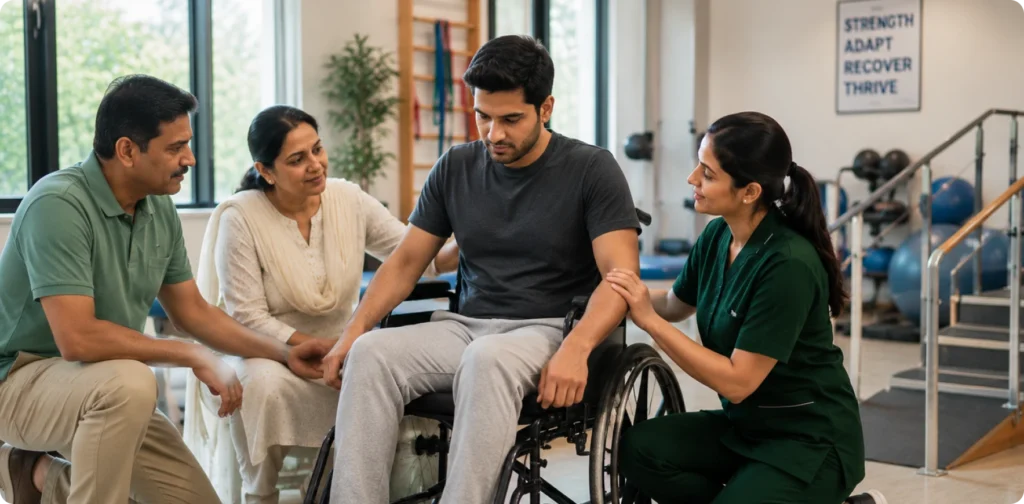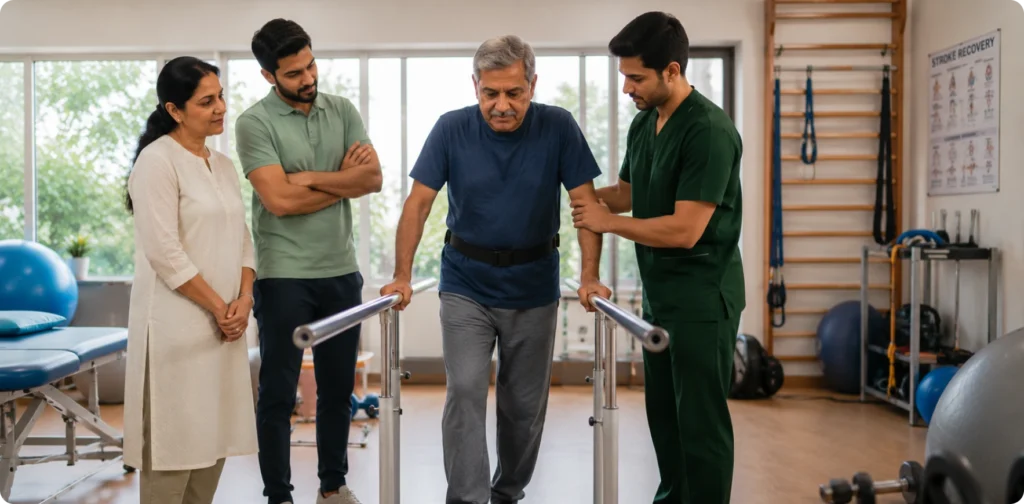

When recovering from an injury, surgery, or managing a chronic condition, one of the most important decisions you’ll face is where to receive physiotherapy. Should you opt for home physiotherapy, or visit a rehabilitation centre?
Both options have their own advantages, and the right choice depends on your medical condition, lifestyle, and recovery goals. This guide will help you make an informed decision.
What is Home Physiotherapy?
Home physiotherapy involves a licensed physiotherapist visiting your home to provide personalized treatment. Sessions are tailored to your environment, routine, and comfort.
Key Benefits
- Convenience: No travel required, especially helpful for elderly or post-surgery patients
- Comfort of home: Familiar surroundings can improve confidence and recovery
- Personalized care: One-on-one attention with no distractions
- Flexible scheduling: Sessions can fit around your daily routine
Best For
- Post-surgery recovery (knee replacement, hip surgery)
- Elderly patients with mobility issues
- Neurological conditions (stroke, Parkinson’s)
- Chronic pain management
What is a Rehabilitation Centre?
A rehabilitation centre is a specialized facility equipped with advanced tools, machines, and a team of healthcare professionals to support recovery.
Key Benefits
- Access to equipment: Advanced machines for faster and targeted recovery
- Multidisciplinary care: Physiotherapists, doctors, and specialists under one roof
- Structured environment: Motivating atmosphere with guided routines
- Group therapy options: Helps with motivation and social interaction
Best For
- Sports injuries requiring intensive rehab
- Complex cases needing specialized equipment
- Patients needing supervised, high-intensity therapy
- Faster functional recovery goals
Home Physiotherapy vs Rehabilitation Centre
| Factor | Home Physiotherapy | Rehabilitation Centre |
|---|---|---|
| Convenience | High | Moderate |
| Cost | Moderate to High (per session) | Often more structured packages |
| Equipment | Limited | Advanced equipment available |
| Personal Attention | One-on-one | Shared attention |
| Recovery Speed | Moderate | Often faster for complex cases |
| Comfort Level | Very high | Clinical environment |
How to Decide What’s Right for You
1. Assess Your Medical Condition
If your condition is mild to moderate, home physiotherapy works well.
For complex injuries or surgeries, a rehabilitation centre may be more effective.
2. Consider Mobility
- Limited mobility → Home physiotherapy
- Able to travel → Rehabilitation centre
3. Evaluate Equipment Needs
If your treatment requires specialized machines, a rehab centre is the better choice.
4. Budget and Time
Home sessions may cost more per visit, while rehab centres often provide package-based pricing.
5. Motivation and Environment
Some patients recover better in a structured, motivating environment, while others prefer privacy and comfort.
Can You Combine Both?
Yes—and this is often the best approach.
- Start with a rehabilitation centre for intensive recovery
- Transition to home physiotherapy for maintenance and long-term care
This hybrid model ensures both professional supervision and long-term convenience.
Final Thoughts
There is no one-size-fits-all answer. The decision between home physiotherapy and a rehabilitation centre depends on your condition, goals, and lifestyle.
- Choose home physiotherapy if you value comfort, convenience, and personalized care
- Choose a rehabilitation centre if you need structured therapy, advanced equipment, and faster recovery
If you’re unsure, consult a qualified physiotherapist—they can assess your condition and guide you toward the best option.
FAQs
It depends on the situation. Home physiotherapy offers focused, one-on-one attention in a familiar, comfortable setting, which works well for many patients, while a rehabilitation centre provides advanced equipment and a coordinated multi-specialist team that can support faster, more targeted recovery in complex or intensive cases. Neither option is universally better; the right choice depends on the patient’s condition and goals.
Home physiotherapy tends to work well for patients recovering from routine post-operative procedures like joint replacements, elderly patients with limited mobility who find travel difficult, people in the maintenance phase of a chronic condition who no longer need intensive input, and general pain management that doesn’t require specialised equipment. For early or intensive neurological recovery, such as the first weeks after a stroke, a centre-based programme is usually the better choice, since therapy intensity is one of the strongest drivers of recovery in this period.
A rehabilitation centre can offer advanced equipment, such as robotic and machine-assisted therapy tools, that are simply not available for a home visit, along with the ability to coordinate a full multidisciplinary team, including physiotherapists, occupational therapists, nurses and doctors, working together on the same treatment plan within one location.
A single home therapy visit generally provides one focused session with a therapist, whereas a rehabilitation centre can structure a patient’s day around multiple therapy sessions plus nursing and medical support in between. The exact time varies by provider and patient need, but centre-based care typically delivers meaningfully more supervised therapy time per day than a home visit alone.
Yes, this is a common and often recommended approach: starting with intensive, centre-based rehabilitation to make rapid initial progress, and then transitioning to home-based physiotherapy for ongoing maintenance, convenience and long-term progress once the patient is more independent.
Conditions that generally benefit more from centre-based therapy include stroke and other neurological injuries in the early, intensive recovery phase, spinal cord injuries needing specialised equipment and close medical oversight, and post-joint-replacement recovery requiring structured, high-intensity therapy, situations that are harder to replicate consistently in a home setting.