
One of the first distinctions families often hear after a spinal cord injury is complete versus incomplete. It can sound like a technical classification at first, but it has real implications for rehabilitation and for what recovery may look like. Both involve damage to the spinal cord. The difference is how much communication remains between the brain and the body below the level of injury.
Understanding complete vs incomplete spinal cord injury early can help patients and families ask better questions, understand what rehabilitation is working towards, and set expectations based on the person’s actual injury rather than on assumptions about what recovery should look like.
What a Spinal Cord Injury Actually Involves
The spinal cord carries signals between the brain and the rest of the body, supporting movement, sensation and a range of essential functions. When it is damaged, those signals can become disrupted. Spinal cord injuries can result from road accidents, falls, sports injuries, spinal fractures, tumours or complications related to surgery, among other causes. The effects depend on where the injury occurred, how severe the damage is, how much function remains, whether the injury is complete or incomplete, and the person’s overall health and access to rehabilitation.
Complete vs Incomplete: Where the Real Difference Lies
The key distinction is whether any sensory or motor function remains in the lowest sacral segments of the spinal cord, known as sacral sparing.
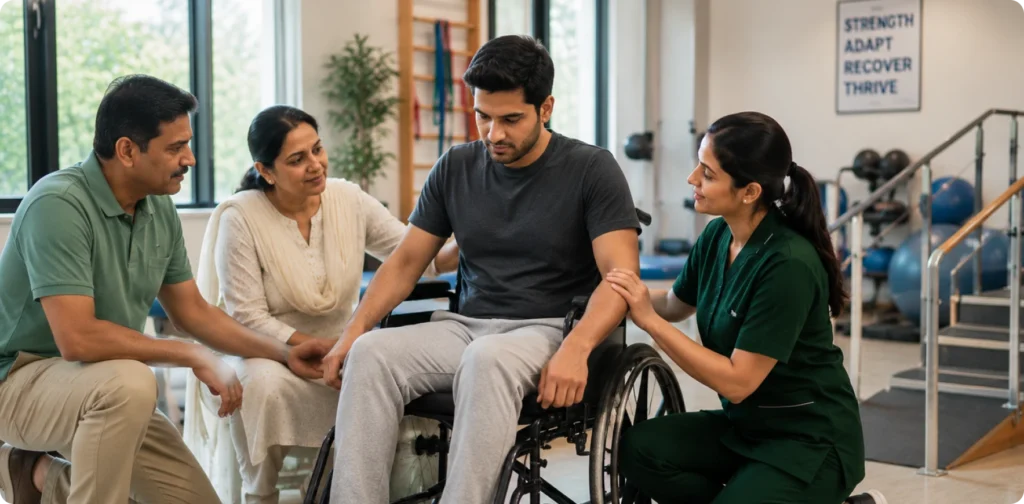
A complete spinal cord injury is clinically defined by the absence of motor and sensory function in the lowest sacral segments, S4–S5. In practical terms, this can mean little to no voluntary movement or sensation in the affected areas. Rehabilitation still has an important role here. It can support independence, reduce the risk of secondary complications, strengthen unaffected abilities and help a person adapt to everyday tasks. Depending on the individual, therapy may focus on upper-body strength, transfers, wheelchair mobility, assistive equipment, pressure injury prevention and practical independence.
An incomplete spinal cord injury means some sensory or motor function remains in the lowest sacral segments, S4–S5. A person may retain some movement, sensation or muscle control below the injury, sometimes with noticeable differences between different parts of the body. That remaining function can give rehabilitation something to build on, and some people regain meaningful movement over time. Recovery still varies widely, so the focus remains on making the most of the abilities that are present while working steadily towards greater function and independence.
How Recovery Actually Happens
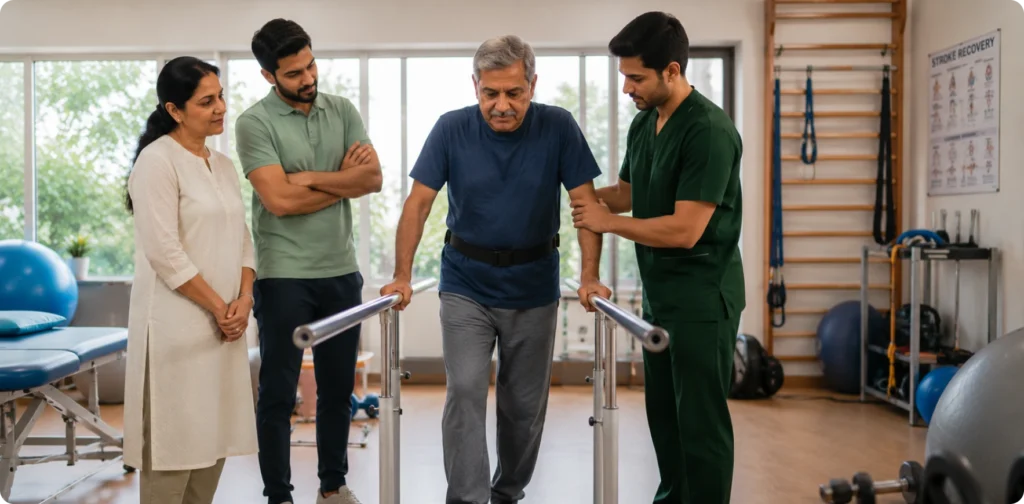
Spinal injury recovery usually involves a combination of medical care, structured rehabilitation and repeated practice over time. Mobility training may work on movement, transfers, balance and functional independence through strengthening, balance exercises, transfer practice and walking training when the patient’s condition allows it. Occupational therapy works alongside this to develop practical skills for dressing, personal care, eating and managing mobility equipment.
Rehabilitation also has to account for problems that can develop alongside the original injury. Muscle stiffness, pressure injuries, reduced mobility and changes in balance can all affect everyday function when they are not actively managed. The rehabilitation process therefore needs to address more than a single mobility target. It has to account for the wider physical and practical demands of living with a spinal cord injury.
Can Someone Walk Again After a Spinal Cord Injury?
There is no single answer because walking recovery depends on several factors. The completeness, level and severity of the injury all matter, along with the amount of strength and sensation that remain, the time since the injury and the person’s participation in rehabilitation. People with incomplete spinal cord injuries may have greater opportunity to work towards walking because some nerve pathways remain available.
That does not make walking the only meaningful measure of recovery. For one person, progress may mean taking steps with assistance. For another, it may mean becoming independent with transfers, wheelchair mobility or daily activities. Rehabilitation works towards the highest level of function and independence that is realistic for that individual, rather than measuring recovery against one universal milestone.
The Rehabilitation Team Involved
Spinal cord injury rehabilitation usually involves several specialists working towards the same broader goals. Physiotherapy for spinal cord injury addresses strength, flexibility, movement patterns, balance and mobility. Occupational therapy focuses on the practical skills required for everyday life, including self-care, equipment use and adaptations to the home environment. Neurological rehabilitation addresses movement, coordination, sensation and functional recovery following injury to the nervous system.
Psychological and emotional support matters too. A spinal cord injury can alter mobility, independence, routines and family roles all at once. Helping a patient and their family adapt to those changes is part of the broader rehabilitation process, especially when recovery takes time and progress does not always follow a predictable pattern.
Why Personalised Rehabilitation Matters
No two spinal cord injuries progress in exactly the same way, even when the clinical description appears similar. A useful rehabilitation plan needs to take into account the level and type of injury, the person’s current abilities, their medical history, their goals, their lifestyle and the support available around them. A standard protocol cannot account for all of those variables.
At Dexterity Care India, rehabilitation programmes are built around that individual context. The focus is on what the patient needs to achieve functionally and what can realistically be worked on over time, rather than applying the same treatment plan to every person living with a spinal cord injury.
Should Rehabilitation Be Residential?
For some patients, intensive rehabilitation in a residential setting can offer advantages that are difficult to reproduce elsewhere. Regular therapy, nursing support, access to rehabilitation specialists, supervised mobility training and ongoing monitoring can all be brought together within a structured recovery environment.
Whether residential rehabilitation is appropriate depends on the individual’s needs. A patient who requires frequent therapy, significant help with daily activities or closer medical supervision may benefit from that level of support, while someone with different needs may be better suited to another rehabilitation setting.
Equipment Used in Spinal Cord Rehabilitation
The equipment used during rehabilitation depends on the person’s condition, functional goals and stage of recovery. This may include wheelchairs, mobility aids, transfer equipment, standing frames, walking support devices and other tools used during strengthening, balance and functional training.
Equipment should support the rehabilitation plan rather than dictate it. The appropriate choice depends on what the patient needs help with, what they are working towards and how safely the equipment can be incorporated into therapy and everyday movement.
A Practical Guide for Families
Family involvement can make a meaningful difference to rehabilitation and to life after discharge. The most useful support is often practical: encouraging active participation in therapy, helping create a safe and accessible home environment, learning the mobility and care techniques recommended by the rehabilitation team and remaining attentive to emotional wellbeing throughout the process.
It is also worth recognising progress in smaller increments. Recovery does not always arrive as a major milestone. Transferring more independently, completing a daily task with less assistance or controlling a movement more consistently can all represent meaningful changes. Those smaller gains are part of the larger picture.
Understanding whether a spinal cord injury is complete or incomplete provides an important starting point for rehabilitation, but it does not determine the entire course of recovery. The level and extent of the injury, the functions that remain, the person’s wider health and the rehabilitation available to them all shape what comes next. With personalised therapy, appropriate support and consistent work, rehabilitation can help build greater function, independence and participation in everyday life.
Frequently Asked Questions
What is the difference between complete and incomplete spinal cord injury?
A complete injury means no motor or sensory function is preserved in the lowest sacral segments, S4–S5. An incomplete injury means some sensory or motor function remains in these segments, known as sacral sparing. A clinical neurological examination determines the classification.
Can a person walk again after a spinal cord injury?
Some people do regain walking ability, particularly when an incomplete injury leaves useful motor or sensory function. Recovery depends on the individual injury, the function that remains and the rehabilitation programme.
What rehabilitation is typically needed?
Rehabilitation may include physiotherapy, occupational therapy, neurological rehabilitation, mobility training and support for everyday independence. The exact programme depends on the person’s injury and functional goals.
Should rehabilitation be residential?
Residential rehabilitation can be appropriate for people who need intensive therapy, structured daily support or closer medical supervision. The right setting depends on the individual’s clinical and functional needs.
What equipment is commonly used?
Wheelchairs, mobility aids, transfer equipment, standing frames, walking support devices and other rehabilitation tools may be used depending on the person’s condition, therapy goals and level of independence.