
A structured, clinician-led approach to rebuilding daily skills, confidence and independence at home.
Every recovery looks different. We support people rebuilding everyday skills at different stages of their recovery journey.
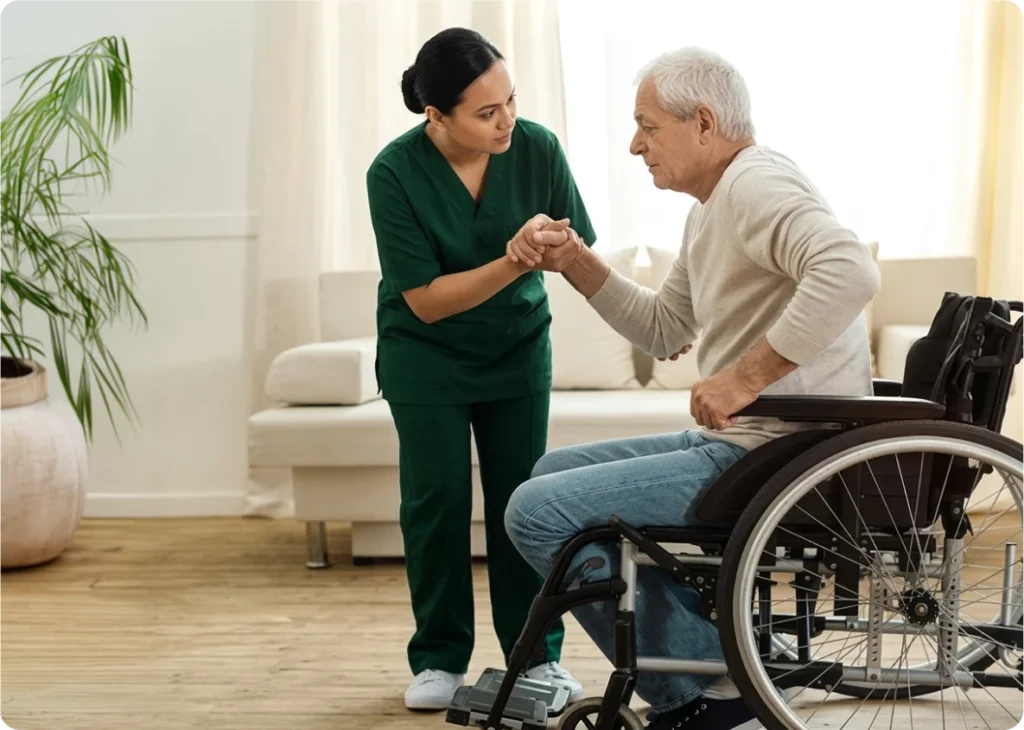
For those relearning daily tasks after a stroke.
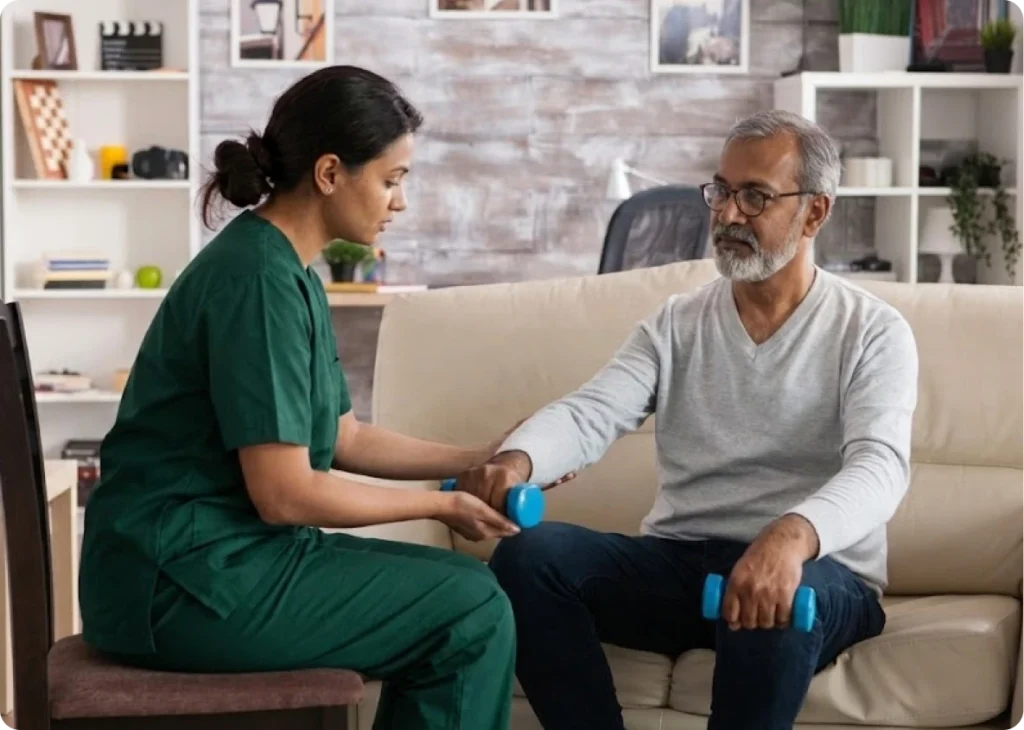
For people rebuilding hand function and fine motor skills.
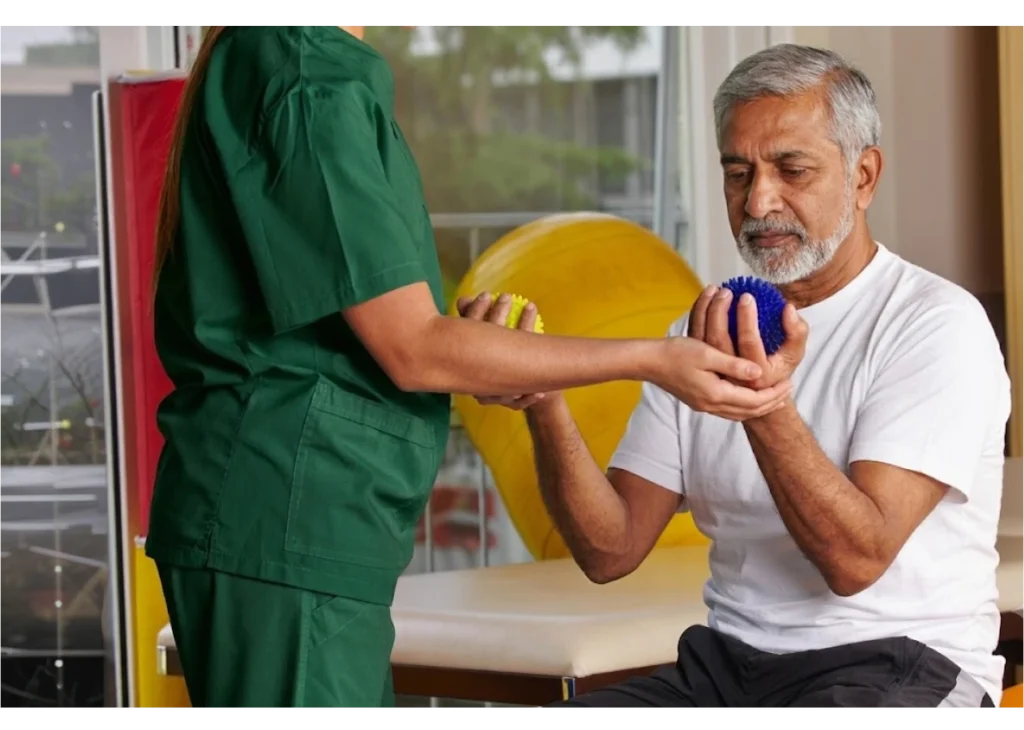
For those needing help with dressing, eating and bathing.
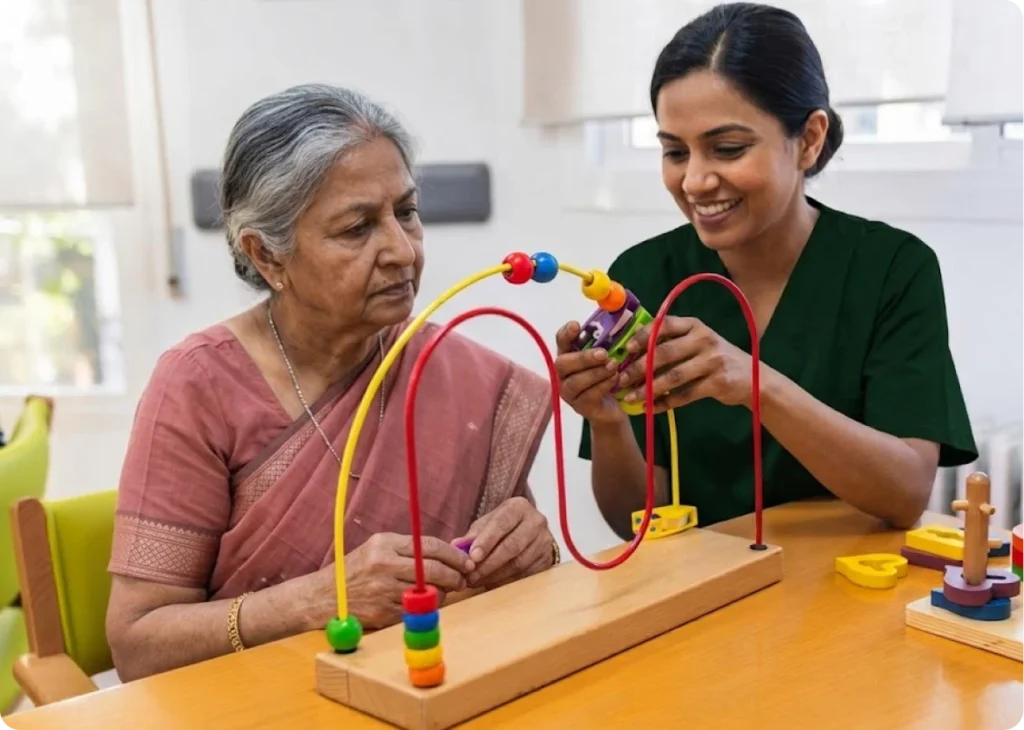
People facing memory or cognitive challenges at home.
For those needing safer routines and home adaptation.
For those needing help with dressing, eating and bathing.
Your care combines clinical expertise, therapy and ongoing support, all working towards the abilities and independence you want to rebuild.
Assessing your daily routines, abilities and home environment.
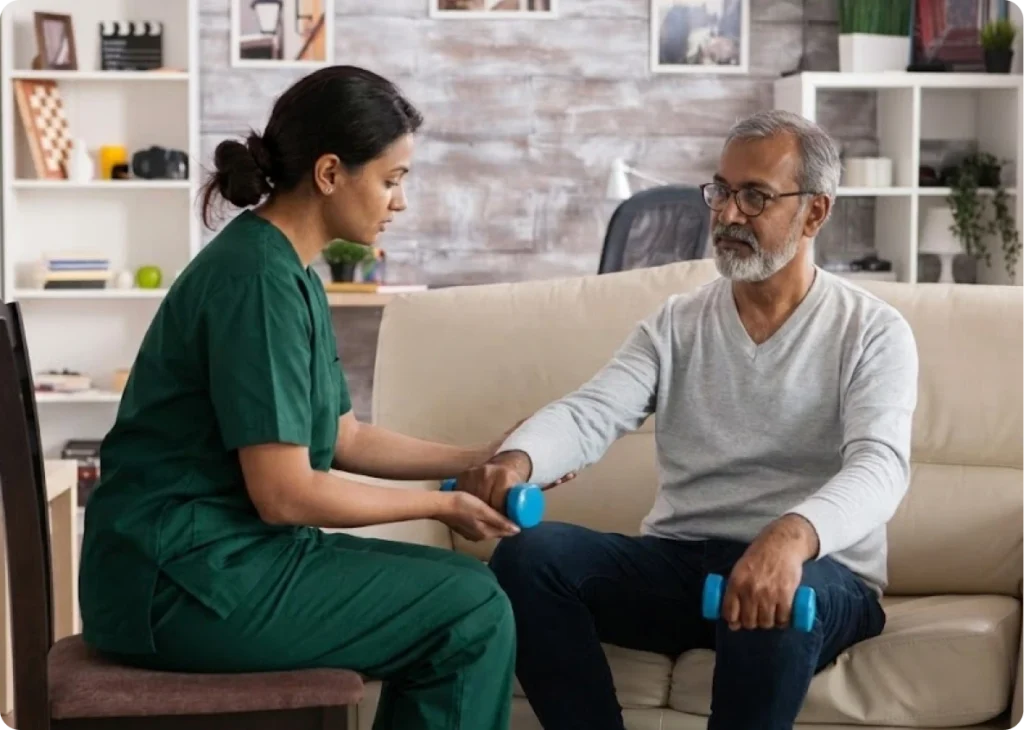
Retraining dressing, eating, bathing and household tasks.
Rebuilding hand function and fine motor control.
Support for memory, attention and problem-solving skills.
Recommending adaptive tools and safer changes at home.
Practising real tasks to rebuild everyday independence.
HOW WE WORK
Your plan is led and reviewed by senior clinicians, and your therapists, nurses and doctors work to the same plan rather than in separate departments. We review progress regularly and change the plan as you change.
An occupational therapist helps patients rebuild the everyday skills, confidence and independence needed to manage daily life after an illness or injury. This includes retraining activities of daily living such as dressing, bathing and eating, rebuilding fine motor and hand function, supporting cognitive skills like memory and problem-solving, and recommending home safety adaptations, all through a structured, clinician-led program.
Physiotherapy mainly focuses on restoring movement, strength, balance and mobility, such as walking or transferring safely. Occupational therapy takes that regained function and applies it to real daily tasks, like dressing, cooking, bathing, using the hands, or managing cognitive demands at home or work. The two disciplines are complementary and often delivered together as part of one coordinated care plan.
Yes, helping patients dress, bathe, eat and manage other daily tasks independently again is a core focus of occupational therapy. Therapists retrain these activities through repeated, task-specific practice, often introducing adaptive techniques or equipment where needed, so patients can regain as much everyday independence as possible.
Yes, occupational therapy includes structured cognitive support for patients recovering from a brain injury, addressing areas such as memory, attention, planning and problem-solving. Therapists use targeted exercises and practical strategies to help patients apply these improving cognitive skills to real daily tasks and routines.
Yes, the occupational therapy team assesses the home environment and advises families on adaptive tools and safety modifications, such as changes that reduce fall risk or make daily tasks easier to manage. These recommendations are tailored to the specific patient’s abilities and home layout rather than being generic.
Yes. Occupational therapy builds the physical and cognitive skills that support a return to work or school, including concentration, stamina, hand function and task management. Therapists work with patients and families to set functional goals around returning to these routines, so it’s worth discussing your specific work or school goals with the team early in the programme.
Rebuilding independence takes time and differs a great deal from person to person. We give you a clear plan, skilled care and an honest view of progress at every stage.