
People who need close, daily support in the early stage of recovery.

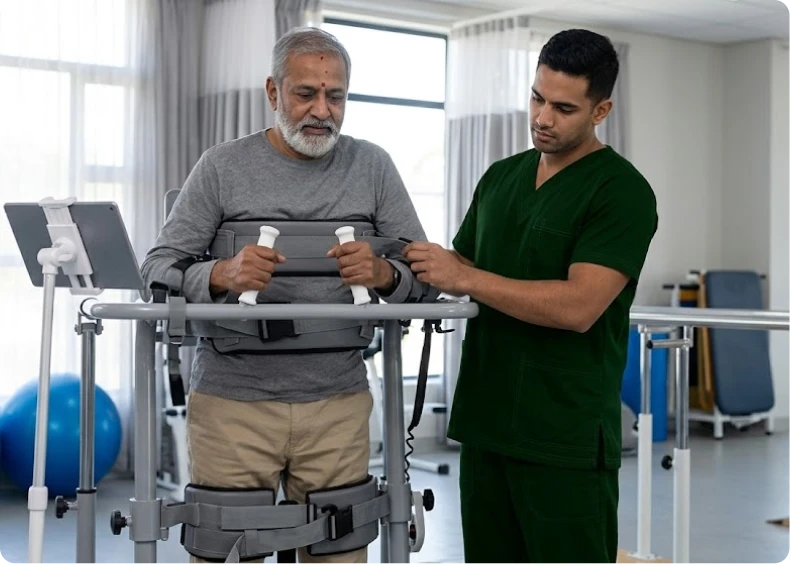
People needing multiple daily therapy sessions for recovery.
People who are not yet safe or comfortable recovering at home.
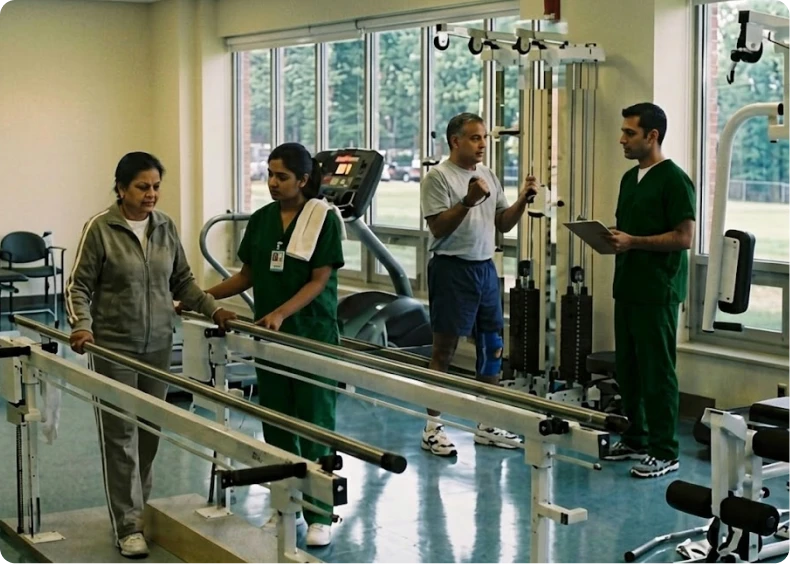
Several therapies a day, working to one plan, rather than a few sessions a week.
Nursing and medical cover between therapy sessions, not only during them.
Equipment and daily supervision that a home cannot safely provide.
A team that watches progress every day and adjusts the plan as you change.
Everything you need to support a safe, structured and successful recovery.
Expert medical support to help you recover with confidence.
Every recovery journey is unique, with timelines that depend on your condition, progress and rehabilitation goals.
We help you prepare for a confident return home with the support, guidance and planning needed for continued recovery.
A residential patient’s day is built around several supervised therapy sessions rather than a single visit, covering physiotherapy, occupational therapy and other disciplines as needed, all working to one coordinated recovery plan. Nursing and medical support are available between sessions, alongside rest, meals and time with family, so the whole day is structured around the patient’s specific goals.
Residential rehabilitation is built around multiple supervised therapy sessions each day, combining physiotherapy, occupational therapy and other disciplines as needed, rather than a few sessions a week. The exact number of hours is set individually based on the patient’s condition, stamina and goals, and is confirmed with the care team as part of the personalised plan agreed before admission.
Overnight attendant arrangements are confirmed with the care team during admission planning, since they depend on the patient’s room type and care needs. Many families do have a personal attendant involved in some capacity during a residential stay, so it’s worth raising this directly during your assessment or facility visit, when the team can confirm sleeping arrangements and any associated cost upfront.
Yes, private rooms are available at Dexterity, within a comfortable environment designed specifically for recovery. Room configurations and amenities can vary depending on availability, so it’s worth confirming current options with the team, ideally during a facility visit, when planning admission.
There is no fixed length of stay; discharge readiness depends on the individual patient’s condition and how well they are progressing toward their specific recovery goals. The team conducts regular progress reviews throughout the stay, and discharge happens once a patient reaches a safe, functional level, supported by a clear discharge and home recovery plan.
Residential patients have access to 24/7 nursing and medical support, with clear emergency response protocols in place in case a patient becomes medically unwell during their stay. This continuous medical coverage between therapy sessions is one of the key reasons families choose residential rehabilitation over purely home-based care.